Salute to Satchmo
Dixieland jazz show that pays tribute to jazz great Louis Armstrong through song, story, and New Orleans style entertainment.
Salute to Satchmo - Concert, History, Entertainment

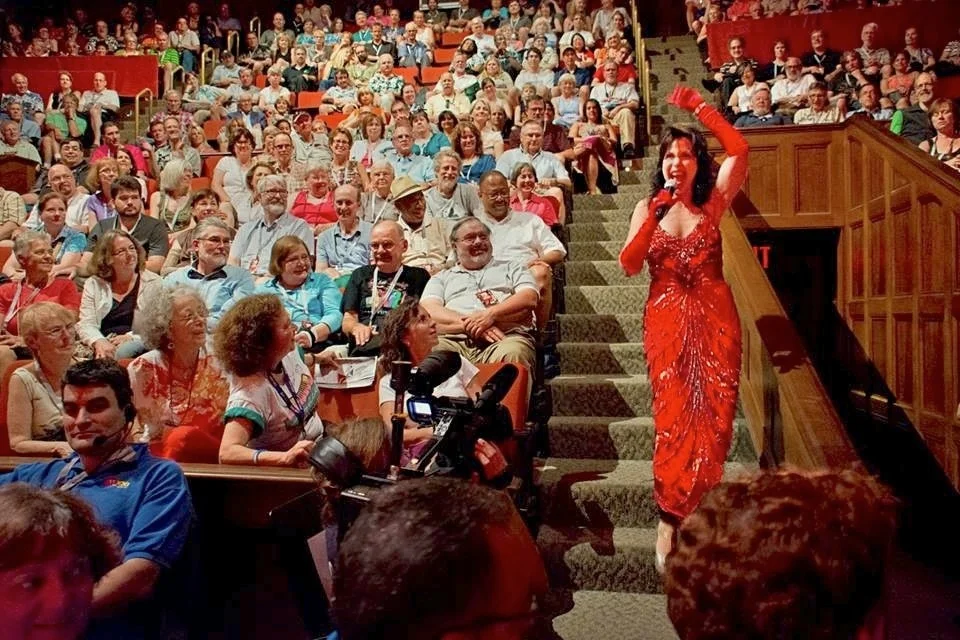
Julie Jules, featured vocalist in Salute to Satchmo!
Join us for this truly New Orleans show and hear the history of jazz through the eyes of Satchmo, while simultaneously enjoying the music that made him famous! The Louis Armstrong Society's "Salute to Satchmo" is a tribute to the life, music, and spirit of Louis.
The band is comprised of members of the Louis Armstrong Society, a secret organization where musicians are invited to perform by invitation only. You'll hear Louis classics such as "Back Home Again in Indiana," "Blueberry Hill," and "Struttin' with Some BBQ." This fun-filled evening culminates in a real second line parade as everyone helps those "Saints Go Marchin' In."

About Louis Armstrong
Coming to prominence in the 1920s as an "inventive" cornet and trumpet player, Armstrong was a foundational influence in jazz, shifting the music's focus from collective improvisation to solo performance. With his instantly recognizable deep and distinctive gravelly voice, Armstrong was also an influential singer, demonstrating great dexterity as an improviser. Renowned for his charismatic stage presence and voice almost as much as for his trumpet-playing, Armstrong's influence extends well beyond jazz music. By the end of his career in the 1960s, he was widely regarded as a profound influence on popular music in general, and in 1962, the Beatles #1 chart-busting hit, "I Wanna Hold Your Hand," was replaced by Louis's recording of "Hello Dolly." To this day, Louis' innovative musical style continues to have a significant impact on the development of the genre and the next generation of jazz musicians.
Song List
- Hello Dolly
- What a Wonderful World
- Someday You'll Be Sorry
- Basin Street Blues
- Mack the Knife
- St. Louis Blues
- Sweet Georgia Brown
- Billy Bailey
- It Had To Be You
- Blueberry Hill
- Sleepy Time Down South
- Up the Lazy River
- Doctor Jazz
- Yes Sir, That's My Baby
- Toot, Toot, Tootsie
- Five Foot Two
- When You're Smiling
- Bourbon Street Parade
...and many more!!!
Audience Members are saying
"Ms. Jules was a terrific performer and all the musicians were incredibly talented...it was a very informative and interesting tale of Louis Armstrong, as well as a history of New Orleans during his time. Not to mention the incredible music and second line that accompanied the narration...a wonderful show!" -Erin Aldridge, Accent on Arrangements, Inc.
"The Selma Community Concert Association is still receiving compliments...Many concert goers have expressed to us how impressed they were with the amount of talent demonstrated by every member of the group." -John Randolph Smith, Jr., Selma Community Concert Association


"Edu-tainment"
The preservation and education of music history is vital to celebrating our unique culture, especially right here in New Orleans: the birthplace of jazz. In the 19th century, there was a huge diversity of ethnicities in Louisiana - jazz gave people a common language and a meeting place, regardless of where they came from. 'Jazz' - with each person on his own instrument, playing together in harmony - became a metaphor for a way of being together in society.
Today, jazz encourages the creativity of young people and teaches them about teamwork, respect, and group dynamics, as well as interaction with their audience. It’s democracy at work! Jazz education is vital to the growth of our young people, and this holistic approach to jazz history and appreciation celebrates the basic human instinct of playing music, while honoring one of the most influential artists of the genre.
These themes are directly at the heart of the Louis Armstrong Society, a secret society founded by New Orleans musicians who are dedicated to the undying love of Armstrong's music. Much like the mysterious krewes of traditional Mardi Gras, the society members come together to secretly select musicians that best embody the spirit of Louis Armstrong. In doing so, the band is committed to showcasing Armstrong's classics, celebrating his unique style, and preserving his legacy in New Orleans and the world - thus entertaining audiences and secretly educating them a bit along the way!
To book Salute to Satchmo contact the band today!
Ever wonder what sets New Orleans jazz apart? Here, the founder & members of the Louis Armstrong Society Jazz Band talk about why New Orleans jazz stands out from all the rest. From PBS documentary on Louis Armstrong Society Jazz Band performing at Xerox Rochester International Jazz Festival in New York, summer 2013.